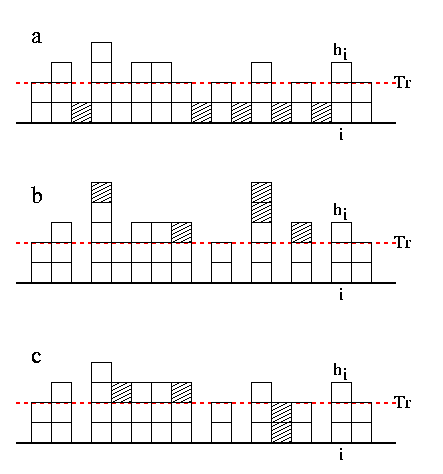
In this model, we alternate levitation and relaxation steps. First, we "earmark" all sites with local height below threshold value Tr (a). Then we move simultaneously top grains at these sites to the left or to the right column at random (b). This constitues the levitation step. At the relaxation step we check if the difference between neighboring sites is greater than certain other threshold and if so, we "slide" the grain downhill (c). It turns out that near the onset of fluidization this model is equivalent to the classic random walk. Below some typical plots illustrating CA dynamics near the fluidization threshold, are shown.
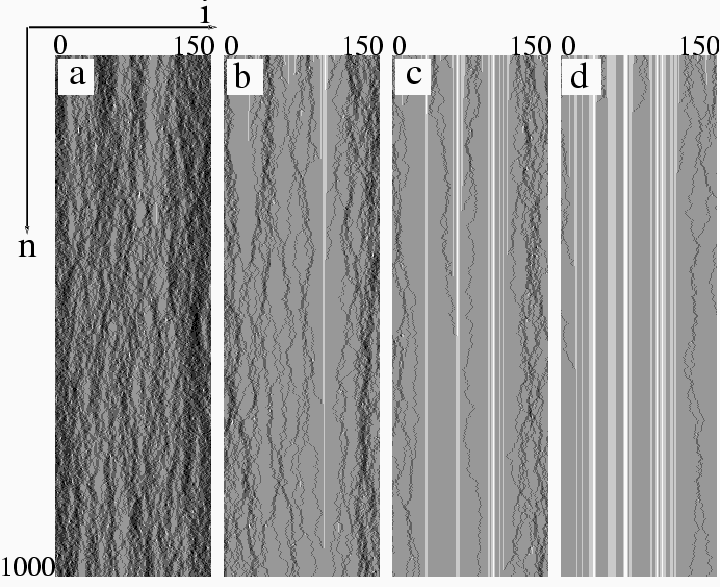
Cellular Automata simulation
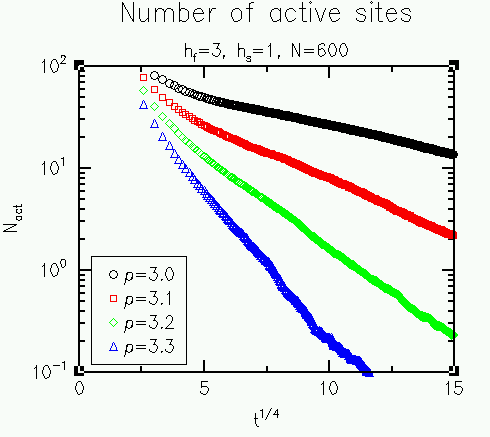
Temporal evolution of the number of active sites for different
values of the average number of particles per site
For more technical details see L.S.Tsimring, R.Ramaswamy, and P.Sherman. Dynamics of a shallow fluidized bed, Phys. Rev. E, 60, 7126-7130 (1999).